Conversations with Circular Innovators: Rinos on Rethinking Entrance Matting

By converting its entire polyamide entrance mat portfolio to ECONYL® regenerated nylon, Rinos is showing how materials that restore waste and reduce their dependence on fossil-based resources can meet the demanding performance requirements of a product in constant use.

Entrance mats don’t get much attention. We often use them, but we rarely stop to examine them. And yet few elements of a building are subjected to more consistent wear.

Every person who enters or leaves a building crosses the welcome mat. The mats must capture dirt and moisture, withstand constant mechanical stress, and maintain their appearance through years of use. No short order.

For Rinos, which has developed and manufactured entrance matting for decades, those demands have long put material performance at the top of the priority list.

In 2012, though, the company added another consideration to the equation. It became one of the first matting manufacturers to launch a premium entrance mat made with ECONYL® regenerated nylon. “At that time, that decision felt like a leap of faith,” says Arnout Appelo, Marketing Director for Rinos. “There were some early signs of interest in sustainability, but most people thought that it wouldn’t matter for this category.”

Nearly 15 years later, the market looks very different. Demand for products with a lower carbon footprint has grown, while building certification systems like LEED and BREEAM have made material choices much more important for architects and builders.

Rinos has responded by converting all of its polyamide entrance mats to ECONYL® regenerated nylon.

Conversations with Circular Innovators: Rinos on Rethinking Entrance Matting Close-up of a Rinos entrance mat, made with ECONYL® nylon.

For Rinos, performance comes first

Laying the foundation for the change? The performance of the material.

For Rinos, no material’s environmental benefit would be worth compromising the fundamental purpose of the entrance mat.

Not just any material will do. Mats must absorb constant dirt and moisture yet release them during vacuum cleaning. That requires a relatively open carpet construction, placing high demands on the fiber itself.

“This is why PA6 (polyamide 6, or nylon) remains the material of choice,” says Appelo. “It withstands mechanical load and supports the open construction needed for effective cleaning far better than alternatives such as PET or PP, which have different strength and resilience properties.”


How Rinos transitioned to nylon without disrupting production

One perceived barrier to introducing regenerated materials is operational. Even a promising material has limited value if incorporating it creates new manufacturing challenges.

But Rinos’ experience has demonstrated otherwise. The company began incorporating the materials into selected products around a decade ago.

“What the company’s operational experience has shown, consistently, is that there is no meaningful difference in manufacturing between virgin PA and ECONYL® nylon,” says Rinos.

As more ECONYL® yarn types have become available, Rinos took an incremental approach to the transition.

“Rinos was able to broaden the switch gradually, product line by product line, until a complete changeover became possible,” the company says.

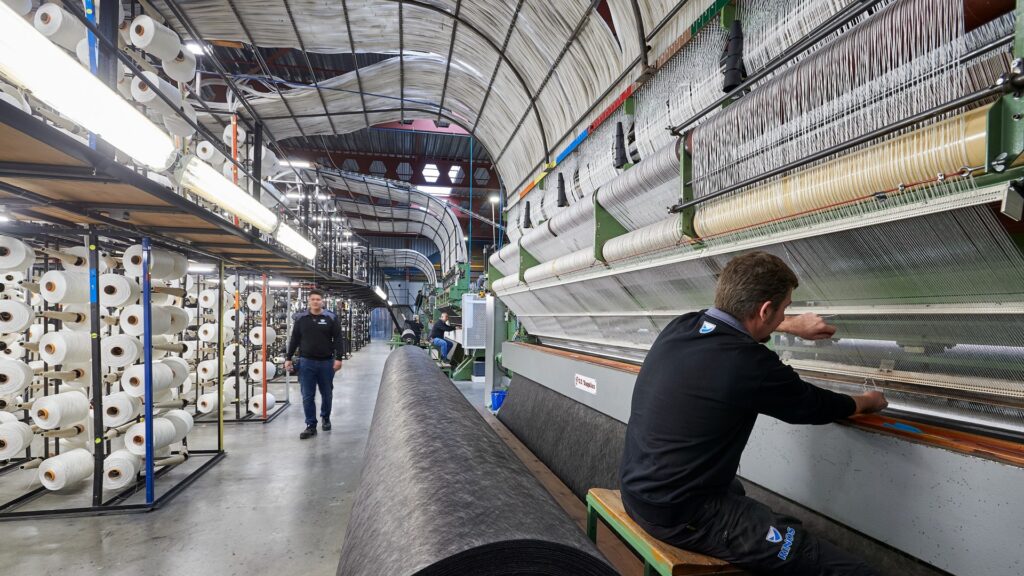
Conversations with Circular Innovators: Rinos on Rethinking Entrance Matting Rinos manufacturing facility for entrance mats.

Rinos’ response to a changing market

Rinos’ material strategy has evolved alongside its customers’ priorities.

Over the years, they’ve increasingly sought hard evidence to support their environmental claims and meet the certification requirements of LEED, BREEAM, and other systems. That includes Environmental Product Declarations (EPDs), which help them verify carbon footprints and indoor air quality on the mats they choose.

“Rinos began developing EPDs for its ECONYL®-based products several years ago, precisely because the use of this regenerated raw material lowers the carbon footprint and, in turn, generates credits within certification schemes such as LEED and BREEAM,” the company says. “It is a distinction that matters to the people specifying these products: interior architects and specifiers consistently show a clear preference for certified products with proven, documented performance.”


The next challenge: Closing the loop

Even still, Rinos has larger goals.

Life Cycle Analysis (LCA) of entrance mats points to two major drivers of global warming potential: the raw materials used to make a product and what happens to it at the end of its useful life. Maintenance, by contrast, accounts for relatively little—once installed, they require only a little vacuuming and periodic spray-extraction.

“The harder question is what happens at the end of a mat’s working life,” says Appelo. “At present, entrance mats cannot be recycled economically, which means incineration in cement kilns remains the only practical disposal route.”

The transition to ECONYL® nylon has already demonstrated that regenerated materials can deliver the performance demanded by a highly functional product. Now the ambition is to build on that progress and address the other end of the product lifecycle.

The challenge isn’t whether ECONYL® nylon can be regenerated—it can. The challenge is in designing a finished entrance mat that allows its materials to be recovered at the end of its useful life.

“It’s a challenge that extends well beyond manufacturing. Solving it will require collaboration across the whole value chain, from manufacturers and distributors to end users and the recycling industry itself,” Appelo says. “The next step, closing the loop entirely, is one the company is committed to helping shape.”

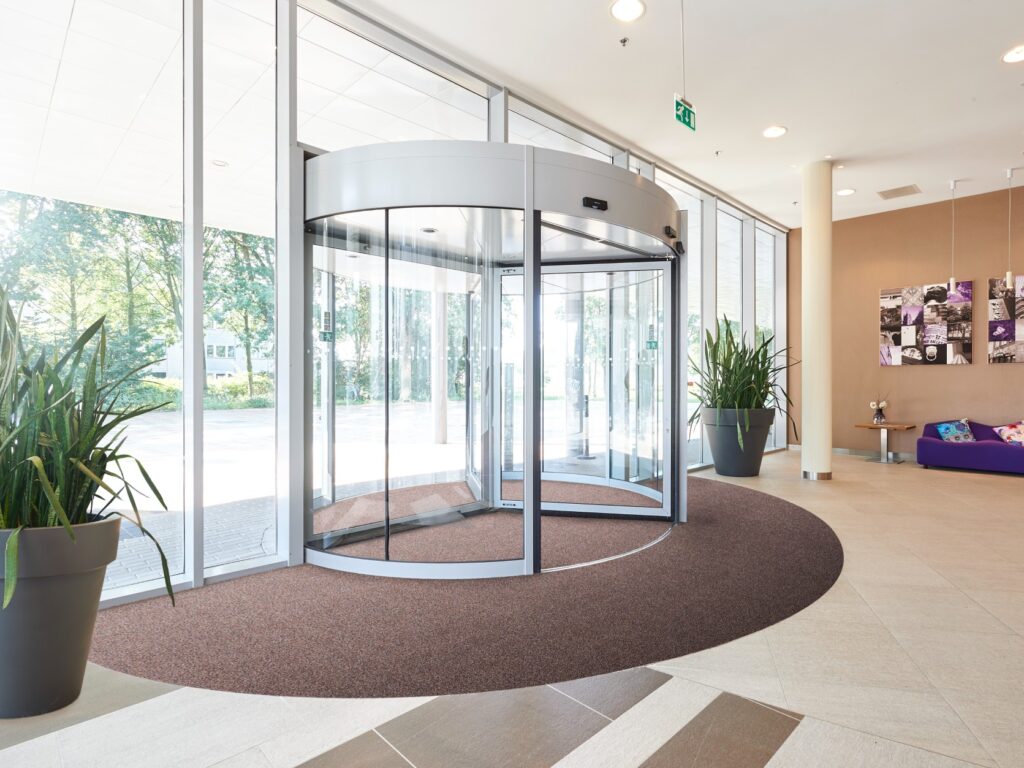
Conversations with Circular Innovators: Rinos on Rethinking Entrance Matting A commercial entrance featuring a large Rinos mat, showcasing the practical application of ECONYL® regenerated nylon in high-traffic areas.
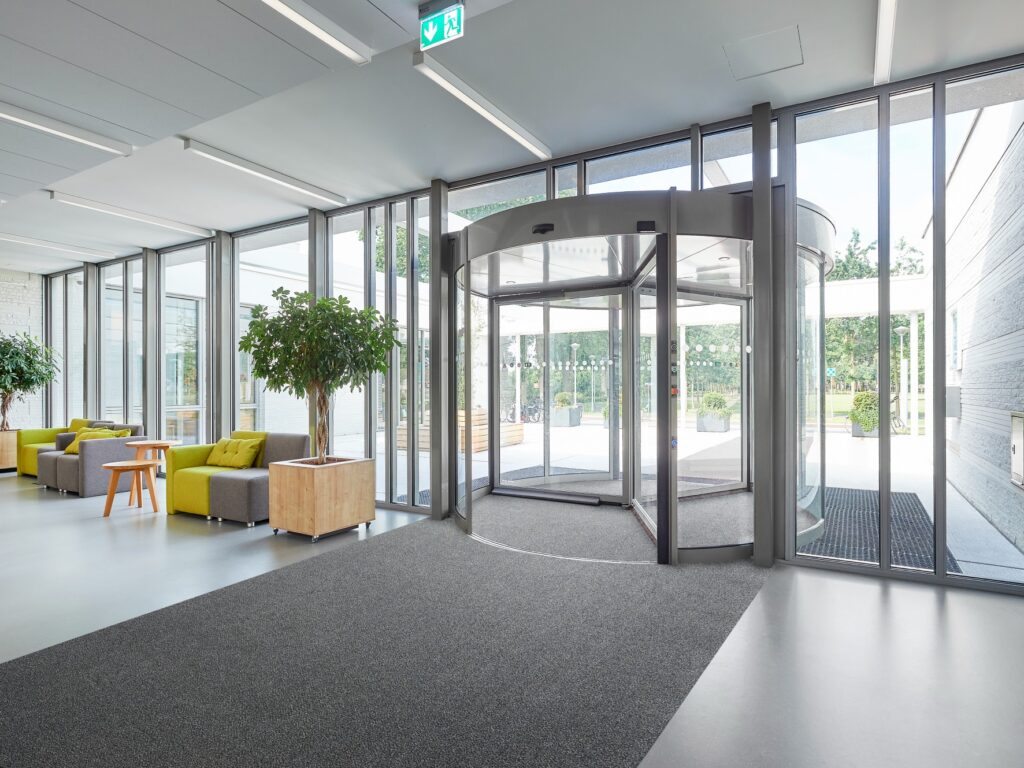
Conversations with Circular Innovators: Rinos on Rethinking Entrance Matting A modern corporate lobby featuring a grey Rinos entrance mat made of ECONYL® regenerated nylon.